From Avize, the story of Anselme and of the Jacques Selosse cuvées that changed Champagne: Initial, Substance and Lieux-Dits, and where to find them on eWibe.
In 1974 Anselme Selosse harvested the family’s Chardonnay vines in Avize, in the heart of the Côte des Blancs, for the first time. From 1980 the domaine has been entirely in his hands, and from there Jacques Selosse took shape: Champagnes fermented in wood, with indigenous yeasts, which taught people to read a Champagne the way one reads a great white wine of terroir.
We retrace Anselme’s story, the cellar method and the cuvées, from Initial to Substance and the Lieux-Dits, then his pupils and his sons; at the end, the bottles you can find on eWibe and how to serve them.
A vigneron in Avize
The Comité Champagne calls récoltant-manipulant the producer who makes Champagne exclusively from the grapes of their own vineyards, and indicates it on the label with the letters RM. It is the opposite of the négociant, who buys grapes from others and builds the style through blending, as the great maisons do (we have written about one of them in the article on Krug Grande Cuvée 174ème Édition). Selosse is one of the best-known cases of récoltant-manipulant: everything starts from the vineyard, and the vineyard is the whole point.
Working your own rows means deciding everything, from pruning to the harvest date, and answering for every choice in the glass. Anselme turned this into a method: viticulture attentive to the soil, restrained yields, grapes picked at full ripeness, and in the cellar intervention reduced to the bare minimum.
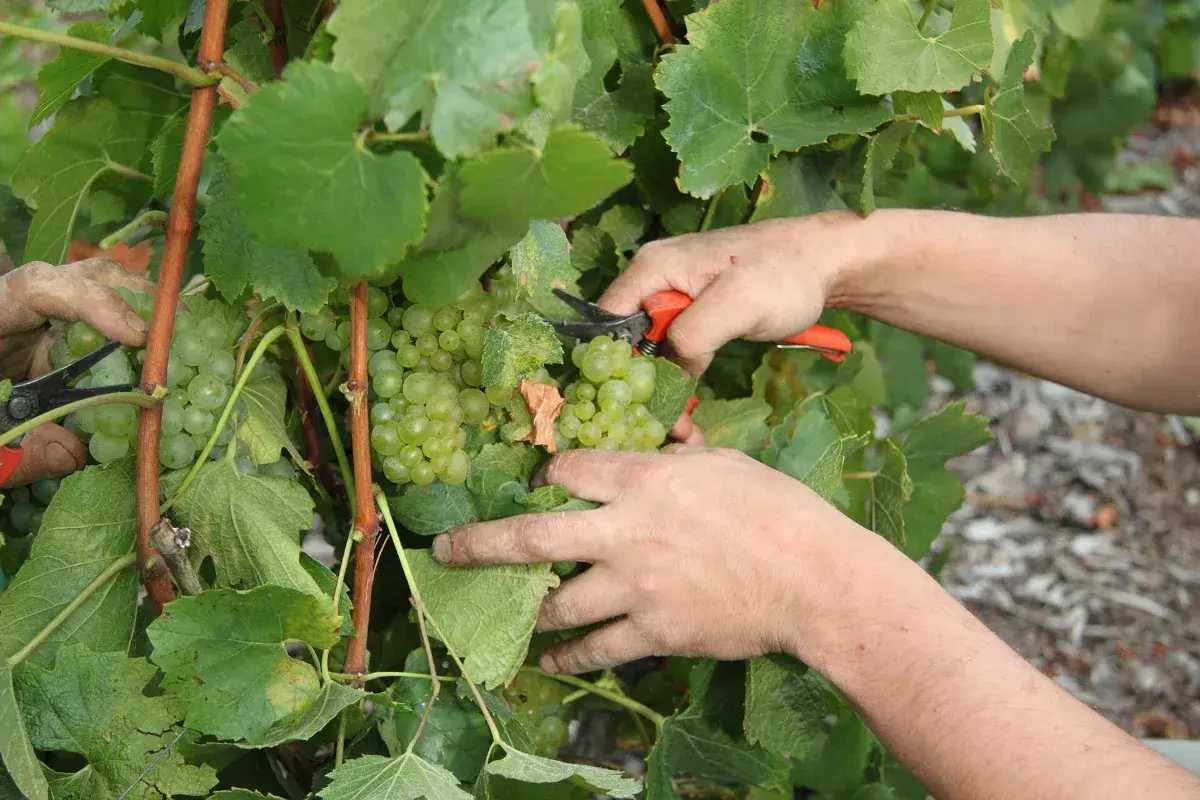
Chardonnay harvest near Avize, September 2012. Photo by Perguillaume, CC BY-SA 4.0, via Wikimedia Commons.
In the cellar: wood, indigenous yeasts, time
The wine ferments with indigenous yeasts, in oak barrels and casks, and stays on the lees for a long time before disgorgement. The reason is technical: wood gives the wine a slow micro-oxygenation, which builds the texture and brings those notes of hazelnut, spice and ripe fruit by which Selosse’s Champagnes are recognisable on the first nose. The dosage, that is the sugar added at disgorgement, is minimal, so it lets the minerality of the chalk of Avize speak.
Substance takes the method to its extreme consequences: it comes from a perpetual reserve on the model of the solera, started in the mid-1980s and topped up every year with new wine. Each disgorgement thus holds the memory of many vintages, and the wine resembles no other cuvée in Champagne.
The cuvées: Initial, V.O., Substance and Lieux-Dits
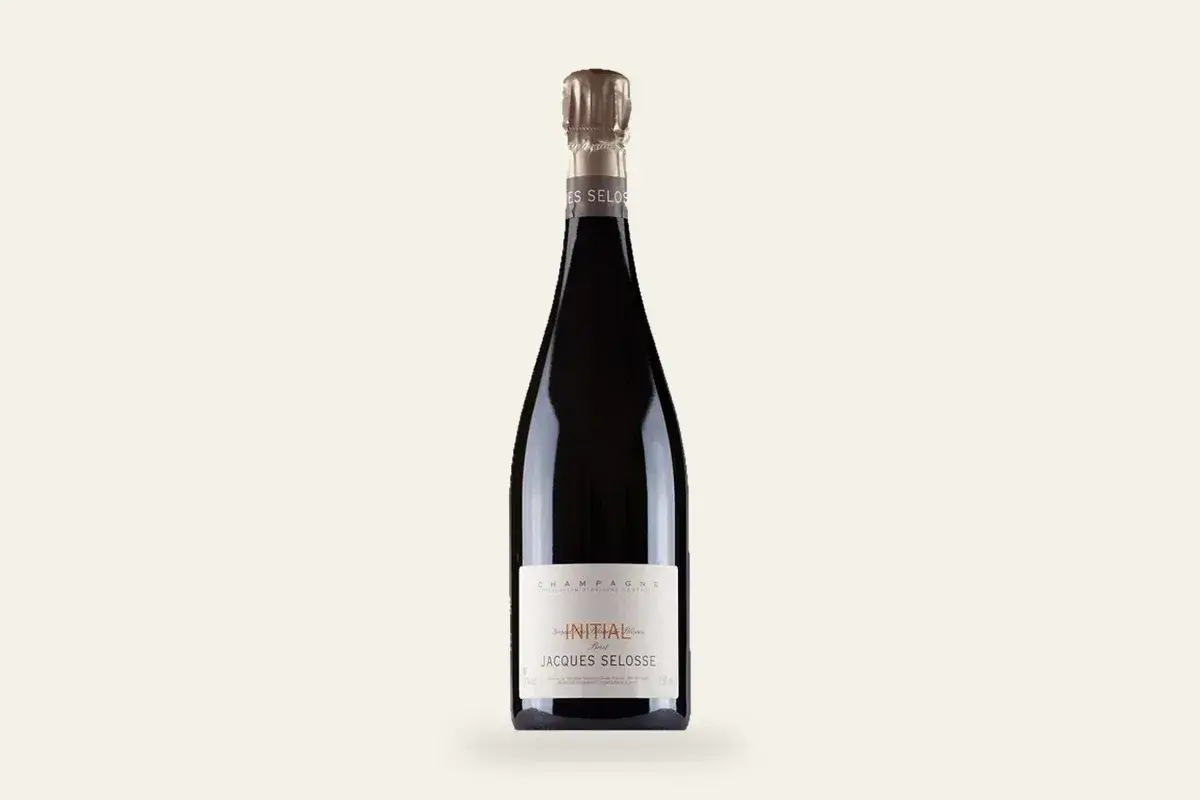
You begin with Initial, Blanc de Blancs Grand Cru: it is the wine with which you get to know the house: the producer’s signature wine. Next comes Version Originale, known as V.O., a Blanc de Blancs Extra Brut Grand Cru, and then Substance, Anselme’s manifesto wine. There is also a Rosé, brut.
The Lieux-Dits are the part closest to the land: six cuvées from single plots, vinified separately to show what changes from one lieu-dit to another. Among those in the eWibe Market are Les Carelles, in Le Mesnil-sur-Oger, La Côte Faron, in Aÿ, Le Bout du Clos, in Ambonnay, and Sous le Mont, Premier Cru of Mareuil-sur-Aÿ; the assorted case brings them together.
After Anselme: Guillaume Selosse and Jérôme Prévost
Today the domaine is run by his son, Guillaume Selosse, who alongside the family house makes small-production cuvées under his own label, such as Largillier, non-vintage, fermented in wood with indigenous yeasts and minimal dosage.
The Avize school left another mark, in Gueux, in the Petite Montagne de Reims: Jérôme Prévost works about two hectares of family vineyard, Les Béguines, mostly Meunier, and his first cuvées, from 1998, were vinified in Anselme Selosse’s cellar. To understand how far vigneron Champagne has become an idea, and no longer a niche, it is worth comparing them.
Selosse on eWibe
In the Selezione you will find Initial, at a fixed price, bought directly from the producing wineries, official importers and our certified partners. In the Market there are thirteen Jacques Selosse listings, across labels and vintages: besides the cuvées already mentioned there are the 2008, 2009, 2010 and 2012 vintages. You can buy them straight away at the best selling price or make an offer to those who own them.
Bottles come into eWibe only from producers, official distributors and certified merchants, never from private collections or auction purchases, and on arrival we check them one by one. They then stay in our vaults, at controlled temperature and humidity, insured for 100% of the purchase price: no handling corresponds to each change of ownership, and the bottle leaves only when you request home delivery.
When to drink them
These are Champagnes that ask for time. Initial, V.O. and Substance, though already enjoyable, will express their qualities fully after a few years in bottle; the vintage wines and the Lieux-Dits should be kept even longer, because their texture only relaxes with the years. If you open one too early, you miss exactly what you chose it for.
Serve them at 10-12 °C, preferably no colder, in a wide white wine glass and not in a flûte. Open them at least an hour beforehand: these are wines that ask for oxygen, and after half an hour in the glass they change profile. At the table they stand up to structured dishes, from roast fish to aged cheeses.
Frequently asked questions
Who is Anselme Selosse?
A vigneron from Avize, in the Côte des Blancs, who has harvested the family’s grapes since 1974 and has run the Jacques Selosse domaine since 1980. He is known for Champagnes fermented in wood with indigenous yeasts and for Substance, made from a solera.
What is a récoltant-manipulant?
According to the Comité Champagne, it is the producer who makes Champagne exclusively from the grapes of their own vineyards. The letters RM appear on the label.
Which Jacques Selosse Champagnes can be found on eWibe?
In the Selezione, Initial; in the Market, thirteen across labels and vintages: Initial, Version Originale, Substance, the Lieux-Dits (Les Carelles, La Côte Faron, Le Bout du Clos, Sous le Mont, plus the assorted case), the Rosé and the 2008, 2009, 2010 and 2012 vintages.
How is a Selosse Champagne served?
At 10-12 °C, in a wide white wine glass and not in a flûte, opening it at least an hour before drinking it.
The bottles mentioned on eWibe
Cover photo: the centre of Avize seen from the vines between Oger and Avize, by October Ends, CC BY-SA 3.0, via Wikimedia Commons, cropped.